 Add to Chrome
 Add to Firefox
 Add to Edge
Real-Time Machine Learning for Embedded Anomaly Detection
Dec 22, 2025
The spread of a resource-constrained Internet of Things (IoT) environment and embedded devices has put pressure on the real-time detection of anomalies occurring at the edge. This survey presents an overview of machine-learning methods aimed specifically at on-device anomaly detection with extremely strict constraints for latency, memory, and power consumption. Lightweight algorithms such as Isolation Forest, One-Class SVM, recurrent architectures, and statistical techniques are compared here according to the realities of embedded implementation. Our survey brings out significant trade-offs of accuracy and computational efficiency of detection, as well as how hardware constraints end up fundamentally redefining algorithm choice. The survey is completed with a set of practical recommendations on the choice of the algorithm depending on the equipment profiles and new trends in TinyML, which can help close the gap between detection capabilities and embedded reality. The paper serves as a strategic roadmap for engineers deploying anomaly detection in edge environments that are constrained by bandwidth and may be safety-critical.

Enhancing Medical Image Analysis through Geometric and Photometric transformations
Jan 23, 2025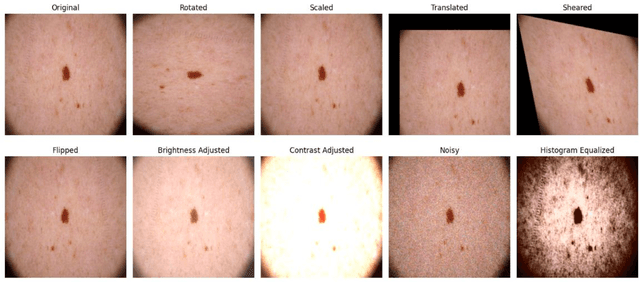
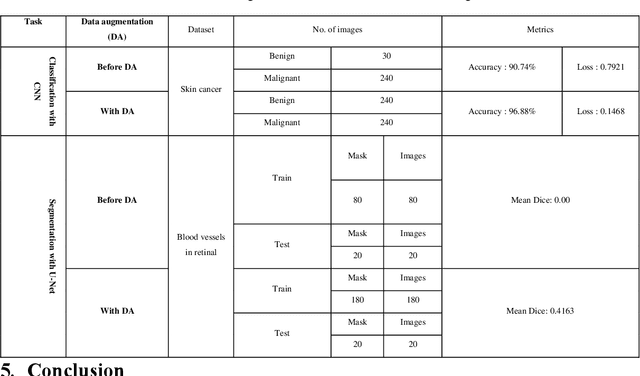
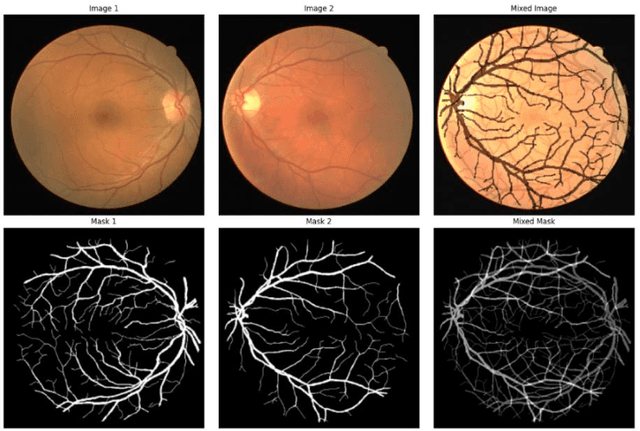
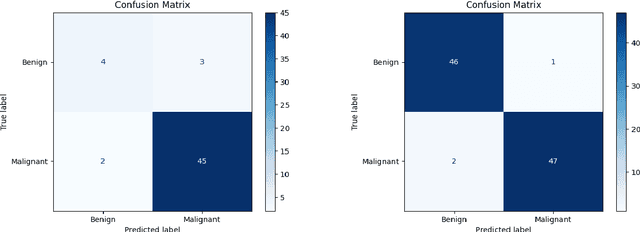
Medical image analysis suffers from a lack of labeled data due to several challenges including patient privacy and lack of experts. Although some AI models only perform well with large amounts of data, we will move to data augmentation where there is a solution to improve the performance of our models and increase the dataset size through traditional or advanced techniques. In this paper, we evaluate the effectiveness of data augmentation techniques on two different medical image datasets. In the first step, we applied some transformation techniques to the skin cancer dataset containing benign and malignant classes. Then, we trained the convolutional neural network (CNN) on the dataset before and after augmentation, which significantly improved test accuracy from 90.74% to 96.88% and decreased test loss from 0.7921 to 0.1468 after augmentation. In the second step, we used the Mixup technique by mixing two random images and their corresponding masks using the retina and blood vessels dataset, then we trained the U-net model and obtained the Dice coefficient which increased from 0 before augmentation to 0.4163 after augmentation. The result shows the effect of using data augmentation to increase the dataset size on the classification and segmentation performance.
Exploring Variational Autoencoders for Medical Image Generation: A Comprehensive Study
Nov 11, 2024Variational autoencoder (VAE) is one of the most common techniques in the field of medical image generation, where this architecture has shown advanced researchers in recent years and has developed into various architectures. VAE has advantages including improving datasets by adding samples in smaller datasets and in datasets with imbalanced classes, and this is how data augmentation works. This paper provides a comprehensive review of studies on VAE in medical imaging, with a special focus on their ability to create synthetic images close to real data so that they can be used for data augmentation. This study reviews important architectures and methods used to develop VAEs for medical images and provides a comparison with other generative models such as GANs on issues such as image quality, and low diversity of generated samples. We discuss recent developments and applications in several medical fields highlighting the ability of VAEs to improve segmentation and classification accuracy.