 Add to Chrome
 Add to Firefox
 Add to Edge
Diffusion Model-Based Data Augmentation for Enhanced Neuron Segmentation
Jan 22, 2026
Neuron segmentation in electron microscopy (EM) aims to reconstruct the complete neuronal connectome; however, current deep learning-based methods are limited by their reliance on large-scale training data and extensive, time-consuming manual annotations. Traditional methods augment the training set through geometric and photometric transformations; however, the generated samples remain highly correlated with the original images and lack structural diversity. To address this limitation, we propose a diffusion-based data augmentation framework capable of generating diverse and structurally plausible image-label pairs for neuron segmentation. Specifically, the framework employs a resolution-aware conditional diffusion model with multi-scale conditioning and EM resolution priors to enable voxel-level image synthesis from 3D masks. It further incorporates a biology-guided mask remodeling module that produces augmented masks with enhanced structural realism. Together, these components effectively enrich the training set and improve segmentation performance. On the AC3 and AC4 datasets under low-annotation regimes, our method improves the ARAND metric by 32.1% and 30.7%, respectively, when combined with two different post-processing methods. Our code is available at https://github.com/HeadLiuYun/NeuroDiff.

FAQ: Mitigating Quantization Error via Regenerating Calibration Data with Family-Aware Quantization
Jan 16, 2026Although post-training quantization (PTQ) provides an efficient numerical compression scheme for deploying large language models (LLMs) on resource-constrained devices, the representativeness and universality of calibration data remain a core bottleneck in determining the accuracy of quantization parameters. Traditional PTQ methods typically rely on limited samples, making it difficult to capture the activation distribution during the inference phase, leading to biases in quantization parameters. To address this, we propose \textbf{FAQ} (Family-Aware Quantization), a calibration data regeneration framework that leverages prior knowledge from LLMs of the same family to generate high-fidelity calibration samples. Specifically, FAQ first inputs the original calibration samples into a larger LLM from the same family as the target model, regenerating a series of high-fidelity calibration data using a highly consistent knowledge system. Subsequently, this data, carrying Chain-of-Thought reasoning and conforming to the expected activation distribution, undergoes group competition under expert guidance to select the best samples, which are then re-normalized to enhance the effectiveness of standard PTQ. Experiments on multiple model series, including Qwen3-8B, show that FAQ reduces accuracy loss by up to 28.5\% compared to the baseline with original calibration data, demonstrating its powerful potential and contribution.
LVNS-RAVE: Diversified audio generation with RAVE and Latent Vector Novelty Search
Apr 22, 2024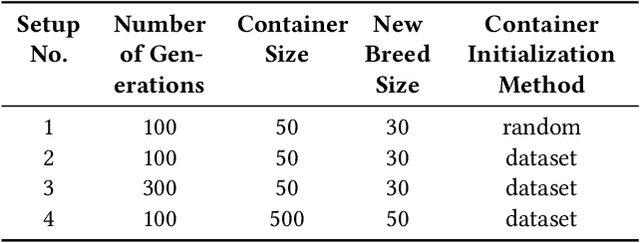
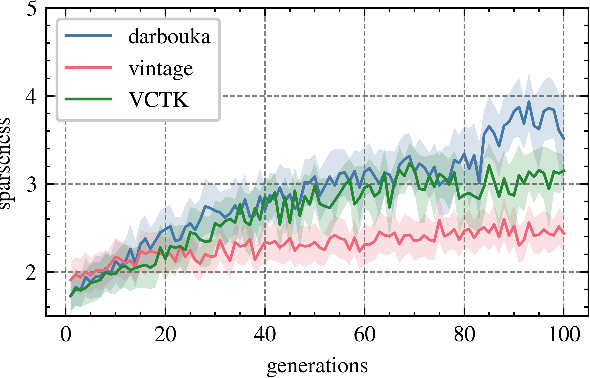
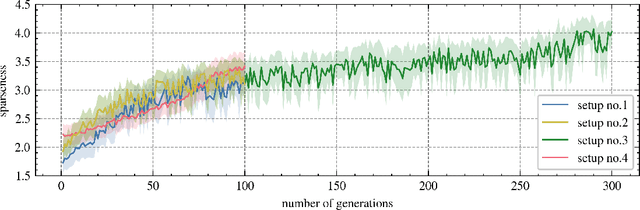
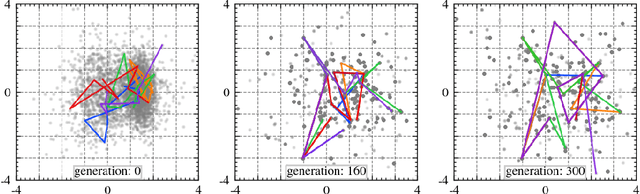
Evolutionary Algorithms and Generative Deep Learning have been two of the most powerful tools for sound generation tasks. However, they have limitations: Evolutionary Algorithms require complicated designs, posing challenges in control and achieving realistic sound generation. Generative Deep Learning models often copy from the dataset and lack creativity. In this paper, we propose LVNS-RAVE, a method to combine Evolutionary Algorithms and Generative Deep Learning to produce realistic and novel sounds. We use the RAVE model as the sound generator and the VGGish model as a novelty evaluator in the Latent Vector Novelty Search (LVNS) algorithm. The reported experiments show that the method can successfully generate diversified, novel audio samples under different mutation setups using different pre-trained RAVE models. The characteristics of the generation process can be easily controlled with the mutation parameters. The proposed algorithm can be a creative tool for sound artists and musicians.