 Add to Chrome
 Add to Firefox
 Add to Edge
Language as Mathematical Structure: Examining Semantic Field Theory Against Language Games
Jan 01, 2026
Large language models (LLMs) offer a new empirical setting in which long-standing theories of linguistic meaning can be examined. This paper contrasts two broad approaches: social constructivist accounts associated with language games, and a mathematically oriented framework we call Semantic Field Theory. Building on earlier work by the author, we formalize the notions of lexical fields (Lexfelder) and linguistic fields (Lingofelder) as interacting structures in a continuous semantic space. We then analyze how core properties of transformer architectures-such as distributed representations, attention mechanisms, and geometric regularities in embedding spaces-relate to these concepts. We argue that the success of LLMs in capturing semantic regularities supports the view that language exhibits an underlying mathematical structure, while their persistent limitations in pragmatic reasoning and context sensitivity are consistent with the importance of social grounding emphasized in philosophical accounts of language use. On this basis, we suggest that mathematical structure and language games can be understood as complementary rather than competing perspectives. The resulting framework clarifies the scope and limits of purely statistical models of language and motivates new directions for theoretically informed AI architectures.

Learn2Extend: Extending sequences by retaining their statistical properties with mixture models
Dec 03, 2023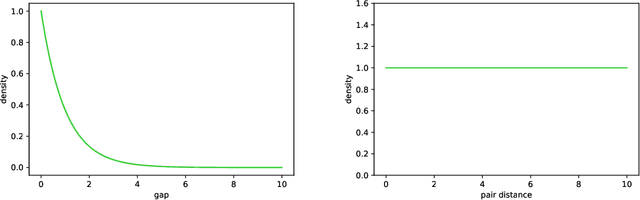
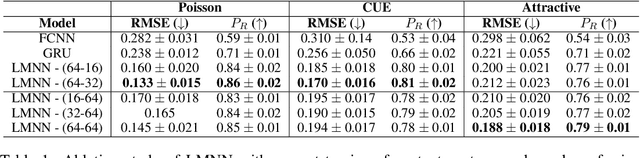
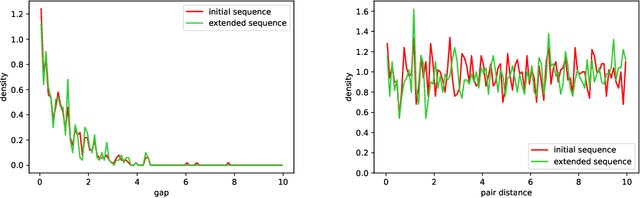
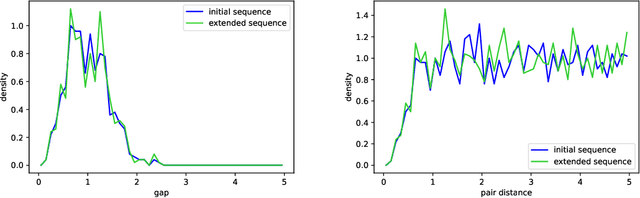
This paper addresses the challenge of extending general finite sequences of real numbers within a subinterval of the real line, maintaining their inherent statistical properties by employing machine learning. Our focus lies on preserving the gap distribution and pair correlation function of these point sets. Leveraging advancements in deep learning applied to point processes, this paper explores the use of an auto-regressive \textit{Sequence Extension Mixture Model} (SEMM) for extending finite sequences, by estimating directly the conditional density, instead of the intensity function. We perform comparative experiments on multiple types of point processes, including Poisson, locally attractive, and locally repelling sequences, and we perform a case study on the prediction of Riemann $\zeta$ function zeroes. The results indicate that the proposed mixture model outperforms traditional neural network architectures in sequence extension with the retention of statistical properties. Given this motivation, we showcase the capabilities of a mixture model to extend sequences, maintaining specific statistical properties, i.e. the gap distribution, and pair correlation indicators.