 Add to Chrome
 Add to Firefox
 Add to Edge
Leveraging Machine Learning for Early Detection of Lung Diseases
Dec 27, 2025
A combination of traditional image processing methods with advanced neural networks concretes a predictive and preventive healthcare paradigm. This study offers rapid, accurate, and non-invasive diagnostic solutions that can significantly impact patient outcomes, particularly in areas with limited access to radiologists and healthcare resources. In this project, deep learning methods apply in enhancing the diagnosis of respiratory diseases such as COVID-19, lung cancer, and pneumonia from chest x-rays. We trained and validated various neural network models, including CNNs, VGG16, InceptionV3, and EfficientNetB0, with high accuracy, precision, recall, and F1 scores to highlight the models' reliability and potential in real-world diagnostic applications.

Machine Learning for Everyone: Simplifying Healthcare Analytics with BigQuery ML
Feb 10, 2025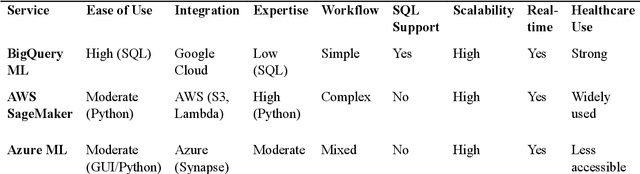
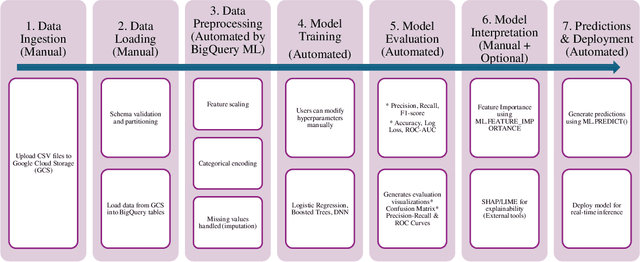
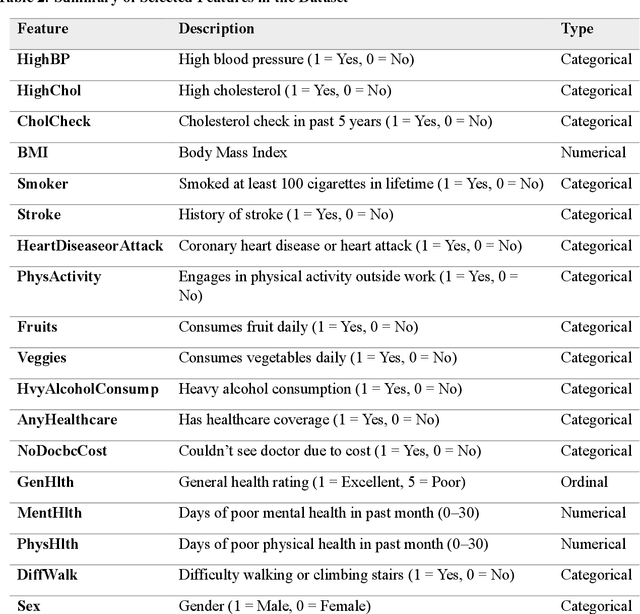
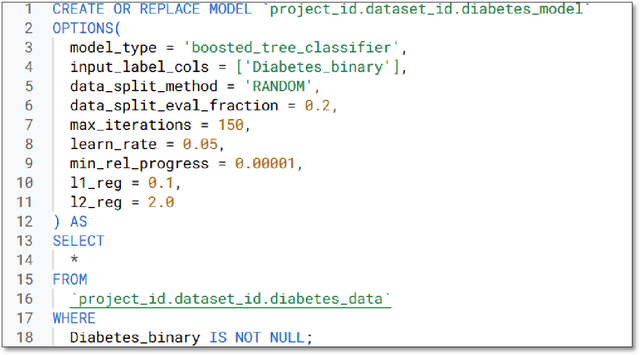
Machine learning (ML) is transforming healthcare by enabling predictive analytics, personalized treatments, and improved patient outcomes. However, traditional ML workflows require specialized skills, infrastructure, and resources, limiting accessibility for many healthcare professionals. This paper explores how Google Cloud's BigQuery ML simplifies the development and deployment of ML models using SQL, reducing technical barriers. Through a case study on diabetes prediction using the Diabetes Health Indicators Dataset, we evaluate three predictive models: Logistic Regression, Boosted Tree, and Deep Neural Network (DNN). Our results demonstrate that the Boosted Tree model achieves the highest performance, making it highly effective for diabetes prediction. This study highlights BigQuery ML's role in democratizing machine learning by providing a scalable, efficient, and accessible solution for healthcare analytics.
Naïve Bayes and Random Forest for Crop Yield Prediction
Apr 23, 2024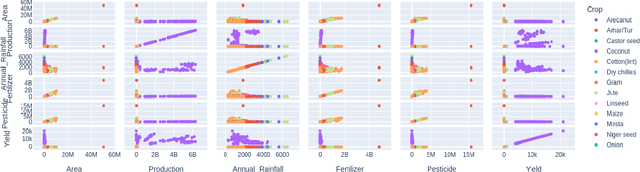
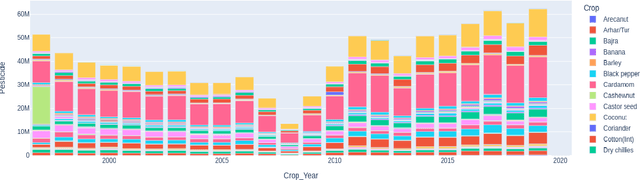
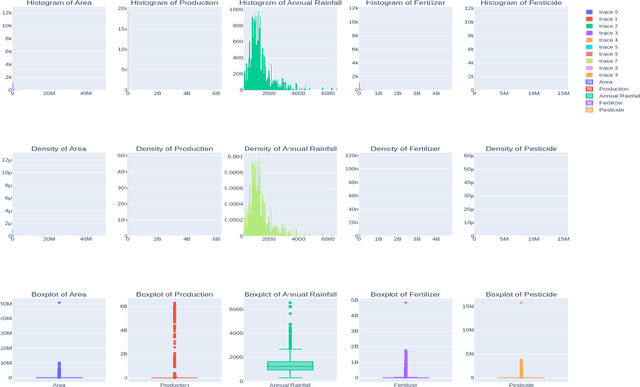
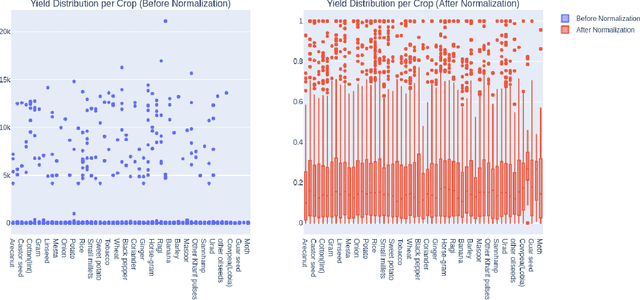
This study analyzes crop yield prediction in India from 1997 to 2020, focusing on various crops and key environmental factors. It aims to predict agricultural yields by utilizing advanced machine learning techniques like Linear Regression, Decision Tree, KNN, Na\"ive Bayes, K-Mean Clustering, and Random Forest. The models, particularly Na\"ive Bayes and Random Forest, demonstrate high effectiveness, as shown through data visualizations. The research concludes that integrating these analytical methods significantly enhances the accuracy and reliability of crop yield predictions, offering vital contributions to agricultural data science.